


Key Findings:
- Total Activity Index at three-month high of 43.3
- High prices and rising interest rates continue to weigh on demand
- Slowdown in input cost inflation takes a pause
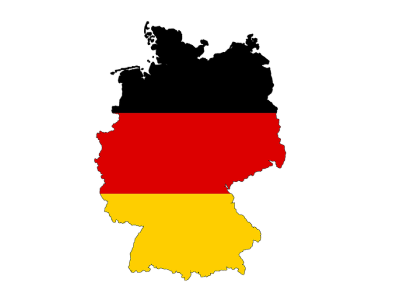
Germany’s construction sector remained in contraction territory in January, amid continued strain on demand from high prices and rising interest rates, latest PMI® data from S&P Global showed. The declines in activity and new orders did, however, ease, while building companies were less pessimistic about the year ahead outlook. The rate of input cost inflation meanwhile ticked up for the first time in three months, though it remained close to December’s two-year low.
The headline S&P Global Germany Construction Purchasing Managers’ Index® (PMI®) – which measures month-on-month changes in total industry activity – came in at 43.3 in January, once again registering firmly below the 50.0 threshold that separates growth from contraction. That said, up from 41.7 in December, the latest reading was the highest for three months.
Underlying data showed sustained downturns in activity across each of the three broad construction categories monitored by the survey. In the cases of both housing and commercial activity, the rate of decline slowed. Civil engineering activity, by contrast, registered a sharp and accelerated rate of contraction that was the quickest since February 2021.
The broad-based reduction in activity in January reflected a lack of incoming new orders, latest survey data showed. Inflows of new work were down for an eleventh straight month, with building companies commenting on the influence of elevated prices and tighter financial conditions. The rate of decline in new orders remained strong, although it did ease to the weakest since last August.
With workloads decreasing, German constructors maintained a preference for lower payroll numbers. Employment fell for the tenth month running in January, and at a solid rate that was slightly quicker than the average over this sequence of decline. There was also a further reduction in the use of subcontractors. Accordingly, the availability of subcontractors improved for the second time in as many months.
As well as cutting staffing capacity, German constructors reduced their purchases of building materials and products in line with falling demand. It marked the tenth month in a row in which a decrease in buying levels has been recorded. The rate of decline was the slowest since last July but remained strong by historical standards.
The Exporting from the UK section of the Construct UK Directory includes
– International Construction Exhibitions – UK Government Support for Exhibiting Overseas – Identifying Suitable Markets – Agent or Distributor – International Project Lead Sources
Building companies continued to face delays in the delivery of purchases, which they partly attributed to low stock levels at suppliers. That said, the degree of pressure on supply chains in January was among the weakest over the past twoand-a-half years.
The rate of input price inflation across Germany’s construction sector ticked up slightly at the start of the year, after having hit a two-year low in December. Where a rise in costs was recorded, some firms linked this to the passthrough of high energy prices.
Looking ahead, constructors remained pessimistic about activity over the coming year. Whilst expectations continued to recover from last October’s near-record low and posted the highest for ten months, they remained far below the historical series average, amid ongoing concerns about various headwinds to demand.
Phil Smith, Economics Associate Director at S&P Global Market Intelligence, said, “Germany’s construction sector remained mired in contraction territory at the start of the new year, as demand for building work remained strained by soaring prices, tightening credit conditions and still-high levels of economic uncertainty. The rates of decline in activity and new orders eased somewhat in January, coinciding with reduced pessimism among businesses towards the outlook, but each of these indicators remained deep in sub-50 territory to suggest further weakness in the coming months.
“Falling workloads meant that construction companies remained in retrenchment mode, scaling back their purchasing activity as well as trimming workforce numbers. Issues over skill shortages in the sector meanwhile look to be easing, with data showing back-toback improvements in the availability of subcontractors.
“On the supply side, German constructors continued to note longer lead times on building materials, but with far less frequency than around this time last year. The rate of cost inflation in January was also well below the highs of the past two years, although a slight uptick suggested a pause in the recent slowing trend.”
For further details, click here.
The Construct UK Sales & Marketing Directory hosts over 75 articles, 1,000 construction events and 30 different databases for download. The annual £195 (+VAT) subscription fee provides unlimited access to all resources on the site.
Keep up to date with the latest construction marketing news by registering for our regular free construction sales and marketing e-bulletin here.
Follow us on Twitter